Weak taxation of wealthy costs Kenya Sh130 billion annually, report finds
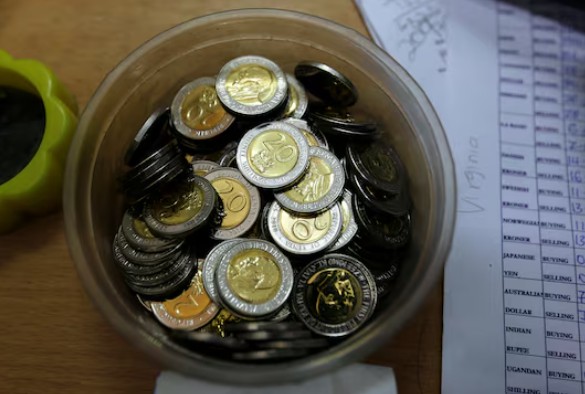
A new Oxfam and IPF report finds Kenya loses up to Sh130 billion annually due to weak taxation of the wealthy, limiting funding for key services such as the Ministry of Health.
Kenya is missing out on up to Sh130 billion (about $1 billion) annually due to ineffective taxation of the wealthy, a new report has revealed.
The findings suggest that gaps in the country’s tax system are allowing high-net-worth individuals to avoid contributing fairly, depriving the government of revenue that could fund critical public services, including nearly the entire Ministry of Health budget.
More To Read
- Ex-Nairobi governor Sonko gets relief as Tribunal directs KRA to unfreeze his bank accounts
- Businesses granted 30-day relief on long-stay container charges at Mombasa port
- Meta to deduct 5 per cent tax on Kenyan creators’ earnings in 2026
- National Treasury says weak revenue, high debt repayments straining Kenya’s budget
- Report warns withholding tax risks pushing digital traders to informal platforms
- Government shifts cargo clearance to Nairobi, Naivasha in bid to decongest Mombasa Port
The analysis, conducted by Oxfam and the Institute of Public Finance (IPF), highlights that despite Kenya’s rising class of millionaires and the increasing concentration of private wealth, the country lacks a robust mechanism to tax the rich.
This shortfall comes at a time when public pressure is mounting to ease the burden on ordinary citizens, especially as Kenya struggles with rising debt, widening inequality, and the need for sustainable revenue sources.
“Despite Kenya having various tax measures that target the wealthy, such as capital gains tax and rental income tax, these often are ineffective as they are charged at lower rates compared to income tax and often fail to yield significant revenue,” said IPF CEO James Muraguri.
The report further notes that the top 10 per cent of the population holds 62.8 per cent of net personal wealth, while the bottom half collectively controls only 4 per cent.
Despite this concentration of wealth, Kenya has no enforceable system to ensure the rich pay a fair share of taxes.
Although income tax in Kenya is theoretically progressive, the system relies heavily on regressive taxes such as VAT and excise duty, which affect low-income households disproportionately.
In 2022/23, consumption taxes alone accounted for 56.2 per cent of government revenue, according to the World Bank.
Meanwhile, wealthy individuals continue to expand and move assets through largely opaque channels, with the top 10 per cent holding over 63 per cent of the country’s personal wealth.
The Africa Wealth Report estimates that Kenya now has 7,200-dollar millionaires and at least 16 centi-millionaires with assets exceeding Sh12.9 billion each.
Experts warn that without reforms to target high-net-worth individuals, Kenya will continue losing billions in potential revenue, limiting its ability to reduce inequality and fund essential services.
Top Stories Today
Reader Comments
Trending